

Understanding secondary hypogammaglobulinemia and its implications for cancer prognosis in children: A retrospective cohort study
Abstract
Introduction. Immunodeficiencies are disturbances in the immune system that can affect cell function, quantity, or both. They can be either primary, associated with genetic defects, or secondary, linked to external factors such as hemato-oncological conditions. Secondary immunodeficiencies can lead to the initiation, reactivation, or acceleration of latent, residual, or active infections, which are the leading cause of mortality.
Objective. To elucidate the occurrence and clinical characteristics of hypogammaglobulinemia in pediatric oncology patients in a high-complexity hospital in
Colombia between January 2020 and December 2022.
Materials and methods. We conducted an observational study with patients under 18 years old with a cancer diagnosis, serum immunoglobulins measurements at the time of the diagnosis, and later follow-up during treatment.
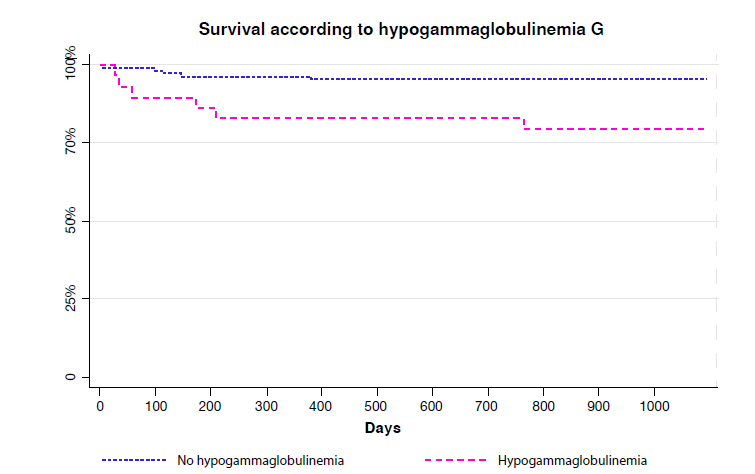
Results. We included 133 patients with a median age of eight years. Based on local guidelines of immunoglobulin levels for age, all patients had normal values at the time of cancer diagnosis. In the follow-up, the most significant reduction among all ages was for IgA and was related to infections and death.
Conclusions. Our findings highlight the importance of measuring immunoglobulin levels at the time of the cancer diagnosis, as hypogammaglobulinemia may be linked to a poorer prognosis. Early detection could potentially improve patient outcomes.
Downloads
References
Alsina L, De Lara M, Santos-Díez Vázquez L. Manejo de las inmunodeficiencias secundarias en pediatría. Accessed: June 17, 2024. Available at: www.aeped.es/protocolos/
Organización Panamericana de la Salud. Día Internacional contra el Cáncer Infantil. 2022. Accessed: June 17, 2024. Available at: https://www.paho.org/es/campanas/diainternacional-contra-cancer-infantil-2022
Organización Panamericana de la Salud. Mes de Concientización del Cáncer Infantil - Septiembre 2023. Accessed: June 17, 2024. Available at: https://www.paho.org/es/campanas/mes-concientizacion-cancer-infantil-septiembre-2023
Sánchez-Ramón S, Bermúdez A, González-Granado LI, Rodríguez-Gallego C, Sastre A, Soler-Palacín P, et al. Primary and secondary immunodeficiency diseases in oncohaematology: Warning signs, diagnosis, and management. Front Immunol. 2019;10. https://doi.org/10.3389/fimmu.2019.00586
Tuano KS, Seth N, Chinen J. Secondary immunodeficiencies: An overview. Ann Allergy Asthma Immunol. 2021;127:617-26. https://doi.org/10.1016/j.anai.2021.08.413
Borte M, Hanitsch LG, Mahlaoui N, Fasshauer M, Huscher D, Speletas M, et al. Facilitated subcutaneous immunoglobulin treatment in patients with immunodeficiencies: The FIGARO Study. J Clin Immunol. 2023;43:1259-71. https://doi.org/10.1007/s10875-023-01470-2
Derpoorter C, Bordon V, Laureys G, Haerynck F, Lammens T. Genes at the crossroad of primary immunodeficiencies and cancer. Front Immunol. 2018;9. https://doi.org/10.3389/fimmu.2018.02544
Friman V, Winqvist O, Blimark C, Langerbeins P, Chapel H, Dhalla F. Secondary immunodeficiency in lymphoproliferative malignancies. Hematol Oncol. 2016;34:121-32. https://doi.org/10.1002/hon.2323
Jaffe EF, Lejtenyi MC, Noya FJD, Mazer BD. Secondary hypogammaglobulinemia. Immunol Allergy Clin North Am. 2001;21:141-63. https://doi.org/10.1016/S0889-8561(05)70197-1
Maarschalk-Ellerbroek LJ, Hoepelman IM, Ellerbroek PM. Immunoglobulin treatment in primary antibody deficiency. Int J Antimicrob Agents. 2011;37:396-404. https://doi.org/10.1016/j.ijantimicag.2010.11.027
Dilley M, Wangberg H, Noone J, Geng B. Primary immunodeficiency diseases treated with immunoglobulin and associated comorbidities. Allergy Asthma Proc. 2021;42:78-86. https://doi.org/10.2500/aap.2021.42.200113
Jolliff CR, Cost KM, Stivrins PC, Grossman PP, Nolte CR, Franco SM, et al. Reference intervals for serum IgG, IgA, IgM, C3, and C4 as determined by rate nephelometry. Clin Chem. 1982;28:126-8.
Some similar items:
- Ernesto Pérez-Sánchez, Raúl Montiel-Cruz, Eréndira Romero-Domínguez, Griselda Pascacio-Bermúdez, Arturo Báez-Hernández, Guadalupe Díaz del Castillo-Flores, Fabián Correa-Morales, Gonzalo Vázquez-Prokopec, Pablo Manrique-Saide, Azael Che-Mendoza, Gabriela Meneses-Ruiz , Irma López-Martínez, María Jesús Sánchez, Seroprevalence of Trypanosoma cruzi among children from Veracruz, Mexico: Epidemiological baseline for a control model based on Chagas disease active transmission , Biomedica: Vol. 44 No. 1 (2024)
- Mónica Fernandes Pineda, Andrés F. Zea-Vera, First part. A 45-year-old man with severe pneumonia, disseminated cytomegalovirus infection, and agammaglobulinemia , Biomedica: Vol. 44 No. Sp. 2 (2024): Inmunología clínica
- Lina M. Castaño-Jaramillo, Olga Rodríguez , Natalia Vélez-Tirado , Nutritional status in pediatric patients with predominant antibody deficiency , Biomedica: Vol. 44 No. Sp. 2 (2024): Inmunología clínica
- Andrés F. Zea-Vera, Carlos Andrés Rodríguez, Sebastián Giraldo, Mario Alejandro Chacón, Luis Fernando Guerrero, Dr., Dr., Dr., María Andrea García, María A. Rengifo, Anilza Bonelo, Maximiliano Parra, Infections, autoimmunity and immunodeficiencies are the leading etiologies of non-cystic fibrosis bronchiectasis in adults from the southwest of Colombia. , Biomedica: Vol. 44 No. Sp. 2 (2024): Inmunología clínica
Copyright (c) 2024 Biomedica

This work is licensed under a Creative Commons Attribution 4.0 International License.
| Article metrics | |
|---|---|
| Abstract views | |
| Galley vies | |
| PDF Views | |
| HTML views | |
| Other views | |
Funding data