

Manejo interdisciplinario de necrólisis epidérmica tóxica inducida por fármacos antiepilépticos en una mujer joven
Resumen
La necrólisis epidérmica tóxica (NET) es una emergencia dermatológica poco común y potencialmente mortal, caracterizada por un desprendimiento epidérmico extenso y afectación de las mucosas, asociada con una morbilidad y mortalidad significativas. El diagnóstico y tratamiento precoz son fundamentales para mejorar los resultados clínicos.
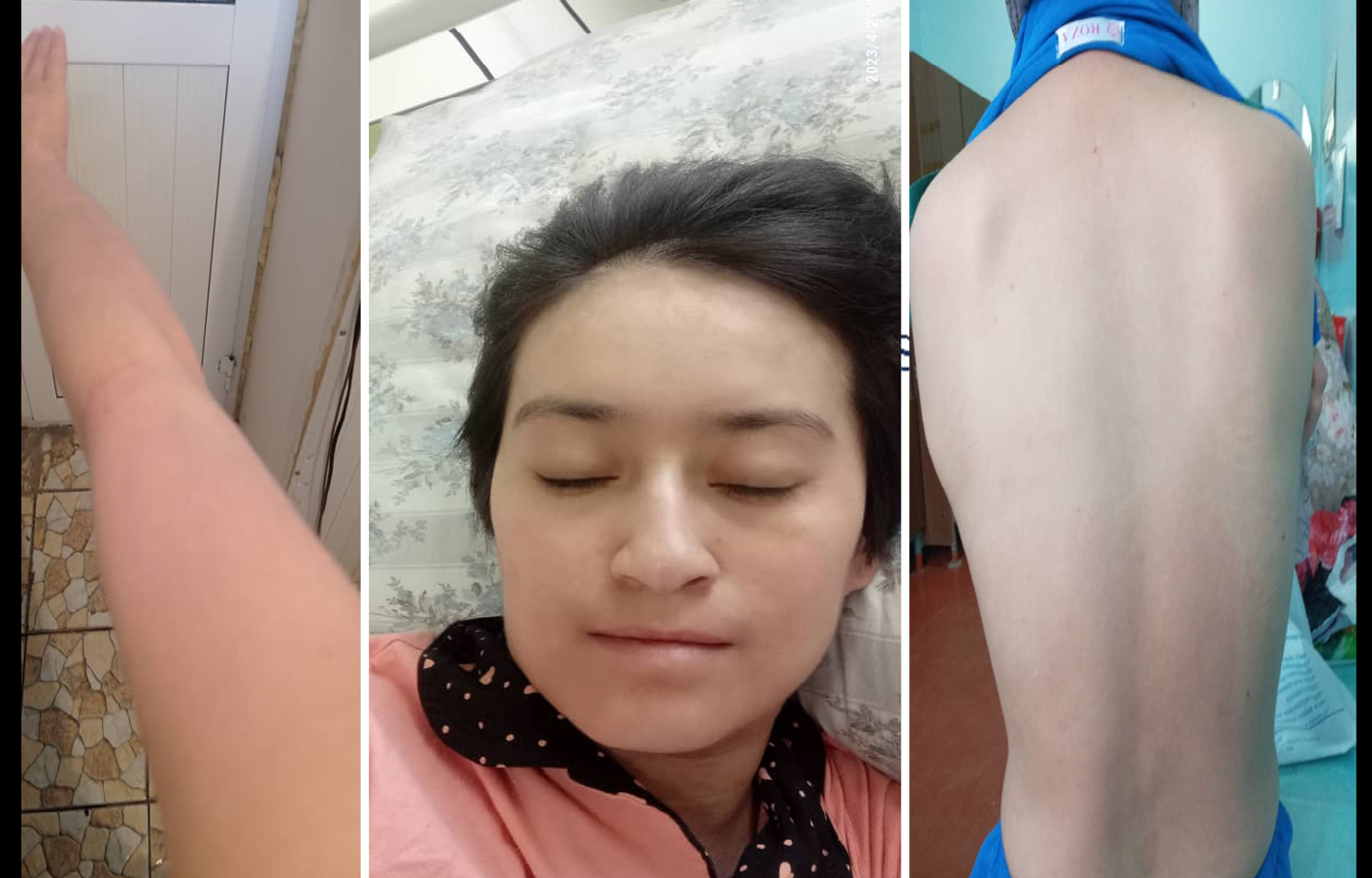
Este informe de caso presenta el curso clínico, el manejo y los resultados de una paciente diagnosticada con NET. Se trata de una mujer de 29 años con antecedentes de polifarmacia y alergias a medicamentos, que se presentó con fiebre de inicio súbito, malestar general y un exantema difuso. Una evaluación exhaustiva reveló un desprendimiento epidérmico extenso que afectaba a más del 80% de la superficie corporal, incluyendo mucosas. La carbamazepina, identificada como agente causal sospechoso, había sido administrada recientemente. La paciente fue ingresada de inmediato en la unidad de cuidados intensivos para recibir atención especializada, incluyendo medidas de soporte, cuidado de heridas y un estricto control del equilibrio de líquidos y electrolitos. Se inició terapia con inmunoglobulina intravenosa, junto con un enfoque multidisciplinario que involucró dermatología, oftalmología y soporte nutricional. La condición de la paciente mejoró gradualmente durante varias semanas, con re-epitelización de las áreas afectadas y resolución de los síntomas sistémicos.
Este caso resalta la importancia del diagnóstico temprano, el manejo oportuno y el enfoque multidisciplinario para optimizar los resultados en esta enfermedad.
Descargas
Referencias bibliográficas
Lyell A. Toxic epidermal necrolysis: An eruption resembling scalding of the skin. Br J Dermatol. 1956;68:355-61. https://doi.org/10.1111/j.1365-2133.1956.tb12766.x
Harr T, French LE. Toxic epidermal necrolysis and Stevens-Johnson syndrome. Orphanet J Rare Dis. 2010;5:39. https://doi.org/10.1186/1750-1172-5-39
Wolkenstein P, Revuz J. Drug-induced severe skin reactions: Incidence, management, and prevention. Drug Saf. 1995;13:56-68. https://doi.org/10.2165/00002018-199513010-00006
Bastuji-Garin S, Rzany B, Stern RS, Shear NH, Naldi L, Roujeau JC. Clinical classification of cases of toxic epidermal necrolysis, Stevens-Johnson syndrome, and erythema multiforme. Arch Dermatol. 1993;129:92-6. https://doi.org/10.1001/archderm.1993.01680220104022
Mockenhaupt M. The current understanding of Stevens-Johnson syndrome and toxic epidermal necrolysis. Expert Rev Clin Immunol. 2011;7:803-13. https://doi.org/10.1586/eci.11.66
Wolkenstein P, Latarjet J, Roujeau JC, Dégos L, Revuz J. Randomised comparison of thalidomide versus placebo in toxic epidermal necrolysis. Lancet. 2002;359:543-4. https://doi.org/10.1016/S0140-6736(02)07754-8
Creamer D, Walsh SA, Dziewulski P, Exton LS, Lee HY, Dart JK, et al. U.K. guidelines for the management of Stevens-Johnson syndrome/toxic epidermal necrolysis in adults 2016. Br J Dermatol. 2016;174:1194-227. https://doi.org/10.1111/bjd.14530
Gupta LK, Martin AM, Agarwal N, D’Souza P. The use of intravenous immunoglobulin in toxic epidermal necrolysis: A retrospective study of non-burn intensive care unit patients. Indian J Dermatol Venereol Leprol. 2006;72:375-8. https://doi.org/10.4103/0378-6323.27700
Roujeau JC, Stern RS. Severe adverse cutaneous reactions to drugs. N Engl J Med. 1994;331:1272-85. https://doi.org/10.1056/NEJM199411103311906
Mockenhaupt M, Viboud C, Dunant A, Naldi L, Halevy S, Bouwes Bavinck JN, et al. Stevens-Johnson syndrome and toxic epidermal necrolysis: Assessment of medication risks with emphasis on recently marketed drugs. The EuroSCAR-study. J Invest Dermatol. 2008;128:35-44. https://doi.org/10.1038/sj.jid.5701033
Bachot N, Roujeau JC. Intravenous immunoglobulin treatment for Stevens-Johnson syndrome and toxic epidermal necrolysis. Dermatol Online J. 2003;9:5. https://escholarship.org/uc/item/4ng9p77w
Schneck J, Fagot JP, Sekula P, Sassolas B, Roujeau JC, Mockenhaupt M. Effects of treatments on the mortality of Stevens-Johnson syndrome and toxic epidermal necrolysis: A retrospective study on patients included in the prospective EuroSCAR Study. J Am Acad Dermatol. 2008;58:33-40. https://doi.org/10.1016/j.jaad.2007.08.036
Devarbhavi H, Raj S, Aradya VH, Rangegowda VT, Veeranna GP, Singh R, Patil M. Druginduced liver injury associated with Stevens-Johnson syndrome/toxic epidermal necrolysis: Patient characteristics, causes, and outcome in 36 cases. Hepatology, 2016;63:993-9. https://doi.org/10.1002/hep.28389
Sanabria-Cabrera J, Medina-Cáliz I, Stankevičiūtė S, Rodríguez-Nicolás A, Almarza-Torres M, Lucena MI, Andrade RJ. Drug-induced liver injury associated with severe cutaneous hypersensitivity reactions: A complex entity in need of a multidisciplinary approach. Curr Pharm Des. 2019;25:3855-71. https://doi.org/10.2174/1381612825666191107161912
Chung WH, Hung SI, Hong HS, Hsih MS, Yang LC, Ho HC, et al. Medical genetics: A marker for Stevens-Johnson syndrome. Nature. 2004;428:486. https://doi.org/10.1038/428486a
Man CB, Kwan P, Baum L, Yu E, Lau KM, Cheng AS, Ng MH. Association between HLA-B*15:02 allele and antiepileptic drug-induced cutaneous reactions in Han Chinese. Epilepsia. 2007;48:1015-8. https://doi.org/10.1111/j.1528-1167.2007.01022.x
Tassaneeyakul W, Tiamkao S, Jantararoungtong T, Chen P, Lin SY, Chen WH, et al. Association between HLA-B*15:02 and carbamazepine-induced severe cutaneous adverse drug reactions in a Thai population. Epilepsia. 2010;51:926-30. https://doi.org/10.1111/j.1528-1167.2010.02533.x
Lonjou C, Thomas L, Borot N, Ledger N, de Toma C, LeLouet H, et al. A marker for Stevens-Johnson syndrome: Ethnicity matters. Pharmacogenomics J. 2006;6:265-8. https://doi.org/10.1038/sj.tpj.6500362
Lonjou C, Borot N, Sekula P, Ledger N, Thomas L, Halevy S, et al. A European study of HLA-B in Stevens-Johnson syndrome and toxic epidermal necrolysis related to five high-risk drugs. Pharmacogenet Genomics. 2008;18:99-107. https://doi.org/10.1097/FPC.0b013e3282f3ef9c
Trent JT, Kirsner RS, Romanelli P, Kerdel FA. Use of wound care products and regimens in patients with chronic wounds at outpatient wound centers: A descriptive study. Adv Skin Wound Care. 2015;28:121-6. https://doi.org/10.1097/01.ASW.0000465328.54013.1c
Derechos de autor 2025 Biomédica

Esta obra está bajo una licencia internacional Creative Commons Atribución 4.0.
| Estadísticas de artículo | |
|---|---|
| Vistas de resúmenes | |
| Vistas de PDF | |
| Descargas de PDF | |
| Vistas de HTML | |
| Otras vistas | |